
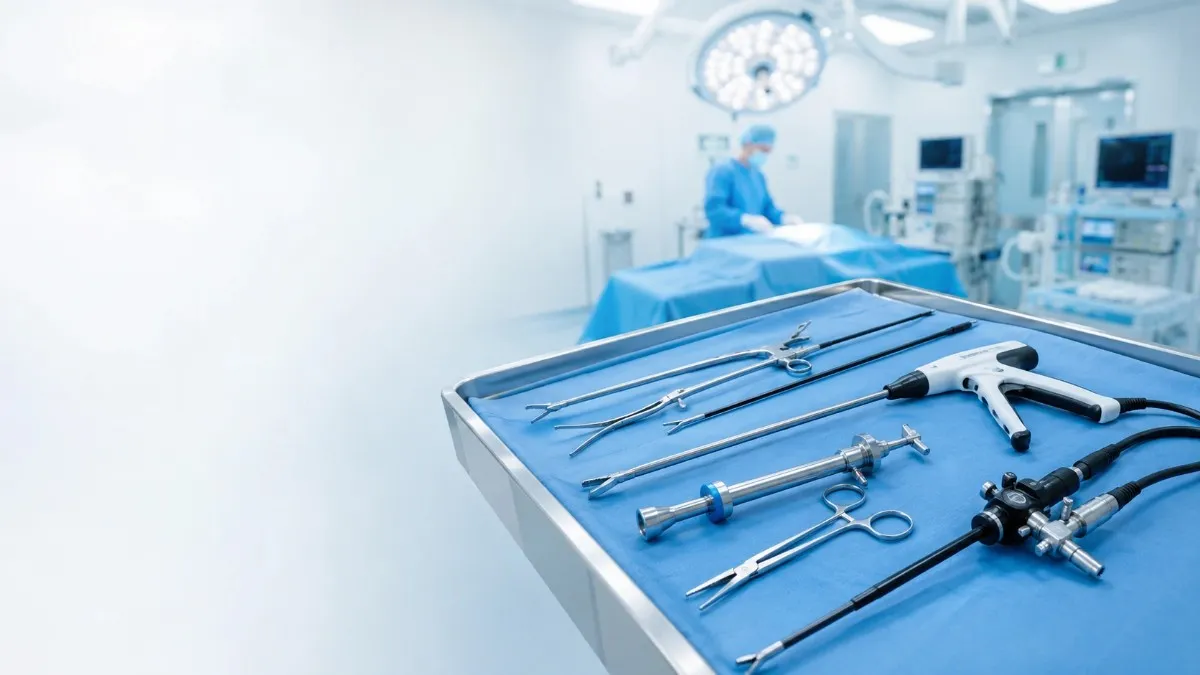
Modern surgical procedures are performed through laparoscopic instruments which has emerged as one of the preferred approaches for the surgical procedure. Minimal invasive procedures that improve health and offer better patient care which is possible with the latest laparoscopic surgical instruments and equipment. One of the advantages of this laparoscopic procedure compared to the traditional surgery is the minimization of hospital stay as compared to any other form of surgery, along with lesser patient recovery time and the minimum painful post-operative procedures. Read the following blog.
What are Laparoscopic Instruments?
Laparoscopic instruments are special kinds of medical devices utilized in order to conduct a minimal invasive type of surgery. This surgery technique requires cutting a minimum of a 0.5 cm incision through which special surgical tools may be utilised to reach internal organs, such as when performing a cholecystectomy (gall bladder removal). An individual can get these instruments by ordering from laparoscopic instruments manufacturers in India.
Standard laparoscopic instruments are extremely thin instruments used in order to reach internal organs without creating substantial harm. There are many other instruments such as graspers that could be used, although these are the ones that are taken into consideration the most. Most surgeons typically prefer the 11mm scope for procedures when a higher amount of visualisation would be ideal. Some hospitals are finding an increased amount of need for “laparoscopic instruments near me” in general because many are looking to provide this option to their patients who can’t have the more complex invasive operations. The set of a typical laparoscopic instrument typically includes trocars, graspers, scissors, dissectors, needle holders, clip applicators, suction instruments and other devices such as those utilised in sealing bleeding.
Many instruments vary in their lengths; some laparoscopic instruments are a foot long for those procedures where the instruments will have a distance to travel between the outer opening of the body, while other laparoscopic instruments can be shorter for surgeries near where incisions have been made.
Fun Fact: “The word "laparoscopy" comes from Greek words meaning "flank" and "to look or examine." Today, laparoscopic surgeries are sometimes called "keyhole surgeries" because only tiny openings are required.”
Major Components of a Laparoscopic Instruments Set
A complete laparoscopic instruments set generally includes:
Laparoscope
A camera thin camera instrument inserted through small incisions for visualisation of body parts.
Trocars
Small and narrow tubes, which act as insertion ports for surgical instruments.
Graspers
Forceps or devices for picking up and grasping tissues.
Scissors
Used for dissection or trimming of tissues.
Needle Holders
Used in holding and tying sutures.
Dissectors
For separating tissues gently.
Clip Applicators
To attach surgical clips to blood vessels, or structures.
Suction and Irrigation Devices
For removal of fluid and debris from the site and washing away blood to keep the surgical site clean.
Forceps
Used for holding the tissues firmly during the surgical procedure.
Go and shop from Sangam Surgicals leading laparoscopic instruments suppliers in India.
Historic Fact: The first major developments in laparoscopic procedures began during the early 20th century. Over time, technological advancements in optics, cameras, and surgical instruments transformed laparoscopic surgery into a widely accepted medical practice globally.”
Functions of Laparoscopic Instruments
Laparoscopic tools perform several essential functions during procedures:
Tissue Manipulation
Hold and maneuver tissue in a controlled manner.
Precise Cutting
Specialised scissors and cutting tools needed for tissue removal.
Suturing
Perform suture closing Using needle holders, surgeons are able to tie surgical knots.
Visualisation
View internal structures via laparoscope This gives surgeons a real-time view of the body’s interior.
Fluid Management
Suction systems remove blood and other fluids.
Vessel Sealing
Clip applicators and advanced tools help seal blood vessels.
Looking for laparoscopic instruments dealers in India go and visit Sangam Surgicals.
About Sangam Surgicals
Sangam Surgicals was founded in 2014 by Mr. Rajkumar Singh with one clear purpose — to put better instruments in the hands of surgeons. The company supplies and exports surgical instruments to hospitals and clinics across India and globally. The range covers laparoscopy, gynaecology, urology, arthroscopy, endoscopy, harmonic scalpels, and surgical staplers — all made from premium-grade stainless steel, built to international quality standards. With ISO-compliant processes and a team of 25+, Sangam Surgicals has spent over a decade doing one thing well: delivering instruments that perform when it matters most. Precision isn't a feature here. It's the baseline.
Benefits of Laparoscopic Instruments
Here are the detailed benefits of laparoscopic instruments:
Smaller Incisions
Tiny cuts reduce surgical trauma and improve healing.
Faster Recovery
Patients generally experience shorter recovery periods.
Reduced Pain
A smaller incision usually means less pain.
Less Blood Loss
Minimal procedures can decrease the loss of blood during surgery.
Lower Infection Risk
Smaller cuts are exposed less to outside contaminants.
Better Cosmetic Results
The surgery leaves patients with less scarring.
Short Hospital Stay
A number of minimally invasive surgeries will let patients go home after a short stay.
Increased Surgical Precision
State-of-the-art instruments can offer greater accuracy.
Buy laparoscopic instruments from reliable sources like Sangam Surgicals.
|
Here is another blog you might be interested in. |
Technical Specification
The following table talks about the technical specification of laparoscopic instruments.
| Specification | Details |
|---|---|
| Material Construction | Medical-grade stainless steel and biocompatible materials |
| Surface Finish | Corrosion-resistant polished finish |
| Instrument Type | Grasping, cutting, dissecting, retracting, and suturing instruments |
| Design Structure | Long and slim profile for minimally invasive procedures |
| Handle Type | Ergonomic and easy-grip handle design |
| Working Mechanism | Manual and energy-assisted operation |
| Tip Configuration | Straight, curved, atraumatic, and specialized tip options |
| Sterilization Compatibility | Suitable for autoclave and standard sterilization methods |
| Reusability | Reusable and disposable variants available |
| Insulation Type | High-quality electrical insulation for electrosurgical use |
| Visibility Support | Compatible with laparoscopic imaging systems |
| Joint Mechanism | Smooth movement with precision control |
| Assembly Type | Detachable and integrated configurations available |
| Application Area | General surgery, gynecology, urology, and gastrointestinal procedures |
| Maintenance Requirement | Easy cleaning and low-maintenance design |
| Safety Features | Secure locking and controlled handling mechanism |
Common Laparoscopic Instruments Uses
Laparoscopic instruments uses for various surgical process, which include:
- Appendix
- Kidney Surgery
- Bariatric Surgery
- Colorectal Surgery
- Gallbladder Surgery
- Diagnostic Surgeries
- Hernia repair Surgery
- Urological Procedures
- Gynecological Procedures
- Gastrointestinal surgeries
For the best deal & for laparoscopic instruments price with good quality all you will find at Sangam Surgicals.
Case Study:
A multispecialty hospital decided to implement and use advanced laparoscopic instruments in standard surgeries. As a result of this, doctors began to see better accuracy, decrease in duration of operation, faster patient recovery after a short time frame. The hospital also noted an increase in the satisfaction level of patients and improvement in overall hospital efficiency.
Applications of Laparoscopic Instruments
Here is a compilation of areas where laparoscopic instruments are regularly applied:
General Surgery
- Hernia repair surgeries
- Colonic and intestinal procedures
- Appendectomy (Appendix removal)
- Gallbladder removal (Cholecystectomy)
Gynecology
- Ovarian cyst removal
- Tubal ligation procedures
- Hysterectomy procedures
- Treatment of endometriosis
Urology
- Kidney Surgeries
- Bladder Surgeries
- Prostate Procedures
- Removal of urinary tract abnormalities
Gastrointestinal Surgery
- Liver Surgeries
- Bariatric Surgeries
- Stomach Procedures
- Colorectal Operations
Thoracic Surgery
- Lung biopsy procedures
- Chest cavity examinations
- Treatment of certain lung conditions
Diagnostic Procedures
- Tissue biopsy collection
- Internal organ examination
- Detection of abdominal abnormalities
Pediatric Surgery
- Minimally invasive procedures in children
- Congenital defect correction surgeries
Oncology Procedures
- Tumor removal surgeries
- Cancer diagnosis and staging procedures
Emergency Surgeries
- Internal bleeding diagnosis
- Acute abdominal condition treatment
- Trauma-related abdominal procedures
Why Choose Sangam Surgicals for Laparoscopic Instruments?
Here are some of the reasons:
- They offer high-quality and high-grade medical materials.
- They provide affordable pricing without sacrificing quality.
- They ensure on-time delivery to address urgent medical needs.
- They provide customer support to help in product selection and after sales services.
Conclusion
The laparoscopic tools, due to the enhancement in the preciseness and decrease in the patients' level of discomfort have come out to be an indisputable component of surgical procedures in the current days. Supporting the development and advancement in the area of minimum invasive surgeries is one of the significant contributions made by the laparoscopic devices. With ongoing development of technology, the need for supreme quality laparoscopic instruments wholesalers in India will surely increase more than expected.
| Buy the best quality laparoscopic instruments for the hospital, clinic or medical firm from the best of laparoscopic instruments suppliers in India Sangam Surgicals, who have got a range of meticulously designed, well-made and précised instruments that can augment your surgeries. |
FAQs Related to Laparoscopic Instruments: Benefits, Function & Uses
Here are some of the ways to select best laparoscopic instruments:
- Evaluate Precision
- Check Material Quality
- Verify Sterilisation Support
- Consider Ergonomic Design
- Purchase from Trusted Sources
- Compare Performance and Value
Sangam Surgicals provides the best quality laparoscopic instruments.
Many laparoscopic instruments are reusable after proper sterilisation, while some are designed for single use.
They typically reduce pain, minimise blood loss, shorten hospital stays, and support faster recovery.
Laparoscopic instruments are preferred in surgeries because they help reduce surgical trauma, improve precision, and support faster patient recovery.