
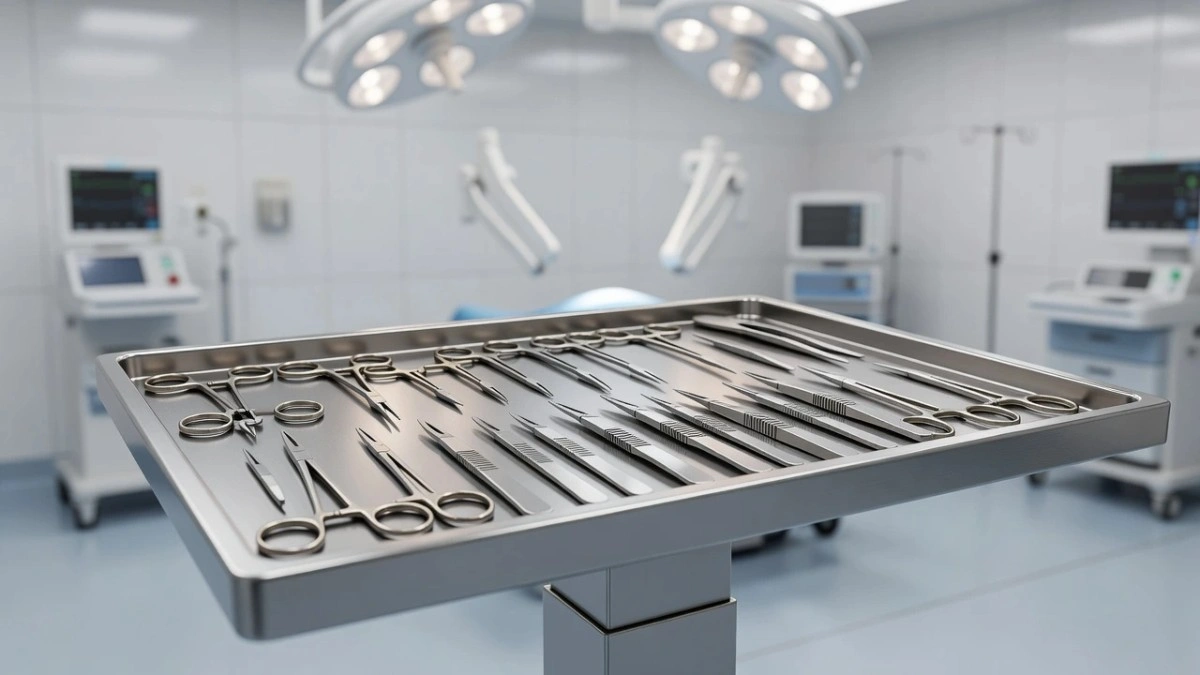
Simple care habits that keep stainless steel surgical tools working the way they should, cycle after cycle
Walk into any busy operation theatre and you'll spot the same complaint, over and over. A scissor that used to cut clean now drags a little. A forceps tip that once locked firm now slips when you don't expect it to. Nobody really talks about this out loud, but it touches every department that leans on Surgical Instruments for daily work. And it's usually not a manufacturing fault either. Most of the time it's handling habits, rushed cleaning, or careless storage, long before the tool even reaches the sterilisation tray.
Replacing Surgical Equipment every few months is costly, and honestly, avoidable in most cases. Get the maintenance routine right and most Medical Surgical Instruments will outlast their expected lifespan by years, not months. That's really what this piece is about - where the wear actually starts, and what a workable care routine looks like once you're past the theory.
Common Challenges Users Face
Before jumping to fixes, it's worth naming what actually goes wrong on the ground. Sterilisation and procurement staff keep running into the same handful of issues:
- Rust spots showing up on Stainless Steel Surgical Instruments even with regular washing
- Hinges going stiff after a few too many autoclave runs
- Blades losing their edge sooner than they should
- Mix-ups over surgical instrument names during stock checks, which throws off storage order
- Buyers chasing surgical instruments price over actual build quality - this one quietly shortens replacement cycles
- Drying skipped or rushed, leaving pit marks on finer Orthopedic Instruments
None of this comes from one bad decision. It piles up slowly, cycle after cycle, from the day a tool leaves its packaging to the thousandth time someone runs it through sterilisation. A missed drying step here, a hurried check there - on their own they barely register, but stacked up over months they start to show.
Product Overview: What Quality Surgical Tools Are Built On
Not every instrument is built the same way, and you notice the gap soon enough. Decent Surgical Tools start out as high-grade stainless alloy, get an even polish, and go through tensile testing before anyone in a hospital touches them. Skip that groundwork and no amount of babying it afterward fixes things.
The Surgical Instrument Manufacturers in India actually worth their salt run a layered process. Forging, precision grinding, heat treatment, a few rounds of inspection after that. What comes out holds an edge, doesn't rust easily, and keeps going through thousands of sterilisation cycles without feeling loose or worn.
How the Right Approach Solves the Problem
Getting more years out of an instrument comes down to two things really - buy well, and don't skip steps in the routine. This is roughly the order most accredited facilities go by:
- Rinse right after use so blood and tissue don't dry onto the surface.
- Stick to enzymatic detergents. Abrasive scrubs chip away the protective layer.
- Check hinges, jaws, and tips under magnification before each sterilisation round.
- Lubricate moving joints - autoclave-safe, instrument-grade only.
- Dry it properly before storing. Trapped moisture causes most of the corrosion you'll see.
- Keep instruments in padded, category-wise trays so nothing knocks against anything else in transit.
Stay close to a dependable Surgical Instrument Suppliers network and you'll usually get pointed toward cycle limits and care notes for each tool type. Cuts out a lot of the guesswork.
Key Features and Benefits of a Proper Maintenance Routine
- Tools last longer - general, orthopaedic, laparoscopic, all of it
- You spend less over time instead of constantly replacing worn stock
- Lower odds of something failing mid-procedure
- Steadier performance across the different Types of Surgical Instruments your specialities use
- Stock checks get easier once surgical instrument names are standardised across departments
- Better resale value if you're offloading bulk stainless stock down the line
|
Trivia: Surgical steel traces back to early stainless alloy work that was originally meant for cutlery, not operation theatres. |
Real-World Applications Across Healthcare Settings
This isn't just a large-hospital problem. Smaller clinics, diagnostic centres, even teaching institutions run into the exact same wear-and-tear questions.
- General hospitals cycling instrument sets through several operation theatres a day
- Orthopaedic units putting heavy, load-bearing Orthopedic Instruments through joint procedures
- Teaching hospitals where the same tools pass through many hands during training
- Ambulatory centres that need a fast turnaround between back-to-back cases
- Export suppliers prepping certified Surgical Equipment for shipment abroad
|
Did You Know: Leave one instrument poorly dried inside a sealed pouch, and visible corrosion can show up after only a handful of cycles. |
Technical Reference: Care Practices by Instrument Category
Here is the detailed technical reference with instrument categories:
| Instrument Category | Common Wear Risk | Recommended Care Practice |
|---|---|---|
| Cutting instruments | Edge dulling, micro-chipping | Separate storage, protective tip guards, gentle handling |
| Hinged forceps and clamps | Joint stiffness, misalignment | Regular lubrication, periodic hinge inspection |
| Orthopedic Instruments | Surface scratching, corrosion under load | Padded trays, thorough drying before storage |
| Retractors and clamps | Spring fatigue over time | Avoid overstretching, rotate stock usage |
| Delicate microsurgical tools | Tip bending, fine-thread damage | Magnified inspection, dedicated soft cases |
Fact:
Lubricating hinges after each cleaning cycle, rather than occasionally, makes a real difference to joint stiffness over time.
Why Facilities Choose Established Manufacturers
Where you buy from matters almost as much as how you care for what you've bought. A solid Surgical Instrument manufacturers in delhi network, or any similarly established regional name, tends to bring steadier batch quality, proper paperwork, and people who actually respond when something needs fixing. More buyers these days check Surgical Instruments online before committing to a bulk order, weighing certifications and alloy grades rather than going in blind. And a manufacturer that's transparent about forging, alloy grade, and inspection steps usually hands you instruments that age in a more predictable way, cycle after cycle.
- Batch quality that doesn't swing from one order to the next
- Paperwork sorted, ready whenever an audit comes around
- Someone on the other end of the phone when storage or cleaning questions come up
- A catalogue broad enough to cover more than one speciality
- Supply that holds up even when order volumes go up
Sangam Surgicals
Sangam Surgicals was founded in 2014 by Mr. Rajkumar Singh with one clear purpose — to put better instruments in the hands of surgeons. The company supplies and exports surgical instruments to hospitals and clinics across India and globally. The range covers laparoscopy, gynaecology, urology, arthroscopy, endoscopy, harmonic scalpels, and surgical staplers — all made from premium-grade stainless steel, built to international quality standards. With ISO-compliant processes and a team of 25+, Sangam Surgicals has spent over a decade doing one thing well: delivering instruments that perform when it matters most. Precision isn't a feature here. It's the baseline.
FAQs
1. How often should surgical instruments be sterilised before they start showing wear?
Ans: There's no fixed number really - it depends on use, but most stainless tools handle a few thousand cycles fine if drying and lubrication aren't skipped along the way regularly.
2. What causes rust spots on stainless steel surgical instruments despite regular cleaning?
Ans: Usually it's trapped moisture, not the cleaning itself. Instruments packed away slightly damp, even in sealed pouches, develop pitting fast - drying properly before storage matters more than people think.
3. Can hinged instruments like forceps be repaired once joints go stiff?
Ans: Sometimes, yes. A stiff hinge often just needs proper lubrication and a magnified inspection. If the metal's pitted or bent though, repair won't hold and replacement becomes the safer call.
4. Does buying cheaper surgical tools actually cost more long-term?
Ans: Often it does. Lower-grade alloy wears faster, needs replacing sooner, and fails more during procedures. Spending a bit more upfront on better-built tools usually pays off across the instrument's working life.
5. What's the biggest mistake hospitals make when storing surgical instruments?
Ans: Skipping the drying step before putting tools away. Moisture left behind, even a small amount, sits inside sealed trays and starts corrosion long before anyone notices a problem during the next use.
6. How do I know if it's time to replace an instrument instead of repairing it?
Ans: If the edge won't hold, the hinge stays loose after lubrication, or there's visible pitting, repair is just delaying the inevitable. Replacing it then saves trouble during an actual procedure.
Conclusion
Long-lasting instruments aren't down to luck. It's cleaning done properly, drying that isn't rushed, storage that's actually thought through, and buying decisions based on how a tool performs over years rather than what it costs upfront. Get those habits into a routine and even instruments under heavy daily use will run well past their expected window - which is good news both for patient outcomes and for whoever's signing off on the procurement budget. Treat maintenance as a standard step rather than something to get to later, and the numbers on failures and replacement spend tend to follow.
| Looking to upgrade your instrument inventory with reliable, long-lasting stainless tools? Connect with our team of Sangam Surgicals today to explore certified options built for daily surgical demands. |
FAQs Related to How to Extend the Service Life of Surgical Instruments
There's no fixed number really - it depends on use, but most stainless tools handle a few thousand cycles fine if drying and lubrication aren't skipped along the way regularly.
Usually it's trapped moisture, not the cleaning itself. Instruments packed away slightly damp, even in sealed pouches, develop pitting fast - drying properly before storage matters more than people think.
Usually it's trapped moisture, not the cleaning itself. Instruments packed away slightly damp, even in sealed pouches, develop pitting fast - drying properly before storage matters more than people think.
Often it does. Lower-grade alloy wears faster, needs replacing sooner, and fails more during procedures. Spending a bit more upfront on better-built tools usually pays off across the instrument's working life.
Often it does. Lower-grade alloy wears faster, needs replacing sooner, and fails more during procedures. Spending a bit more upfront on better-built tools usually pays off across the instrument's working life.
Often it does. Lower-grade alloy wears faster, needs replacing sooner, and fails more during procedures. Spending a bit more upfront on better-built tools usually pays off across the instrument's working life.