
A practical buying guide for hospitals, urology centres and procurement teams evaluating dependable TURP instrumentation.
Every transurethral resection depends on one thing above all: dependable TURP set surgical instruments. Get the choice wrong, and a mismatched or low-grade set doesn't just slow things down — it can frustrate a surgeon mid-case or fail outright. Build quality, compatibility, procurement transparency: all three carry real weight here.
What follows isn't a marketing copy. It's a breakdown of what genuinely matters when a hospital or urology centre evaluates TURP surgical instruments, built on facts instead of brochure claims.
Understanding TURP Set Surgical Instruments
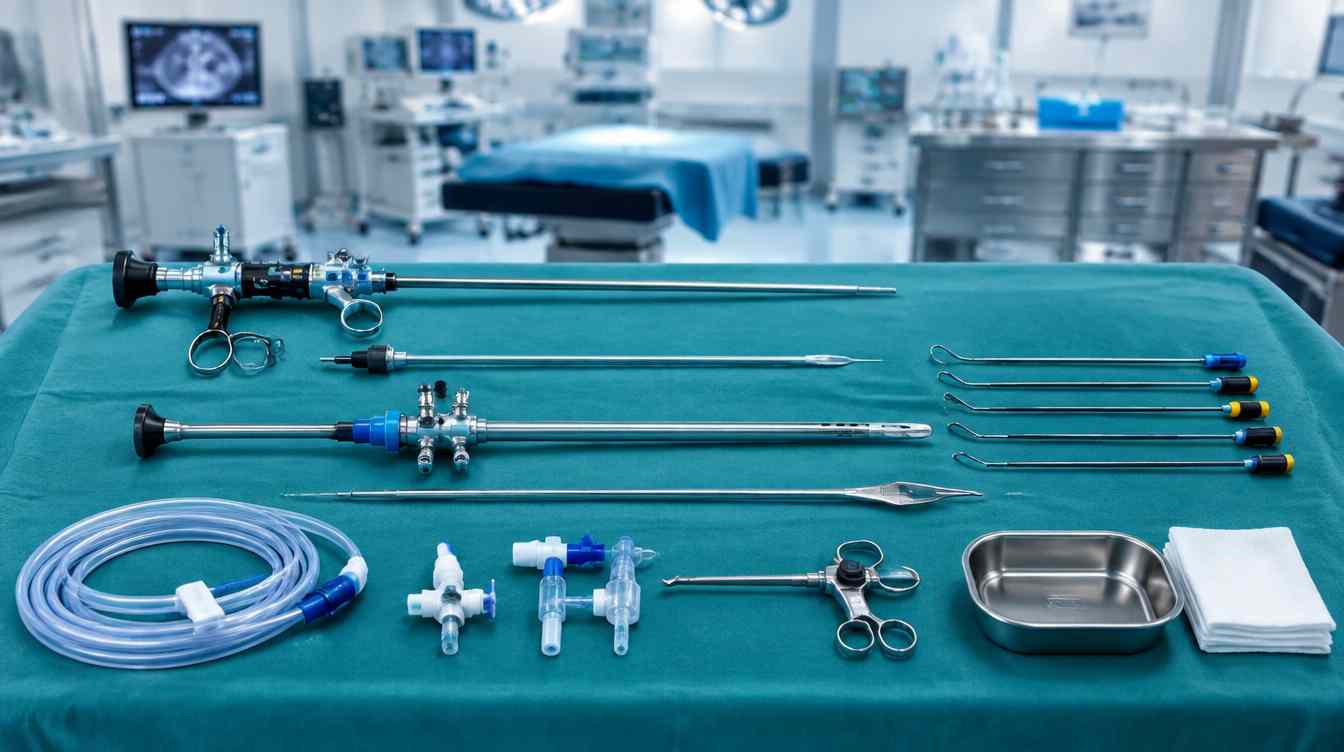
What exactly does a TURP set include? At its core, it's the full instrument system used for transurethral resection of the prostate — a resectoscope, working element, sheath, obturator, telescope and electrodes, built to function as one unit. A hospital doesn't need scattered parts; it needs a working TURP instrument set where every piece is accounted for.
This section stays short, since the product page already goes deeper into build details. The real point: completeness separates a genuinely usable urology surgical instruments system from a risky assembly of parts.
Key Components Hospitals Should Check in a TURP Set
Many buyers inspect the resectoscope and stop there. That's not enough. A full look at TURP set components means examining every included piece before signing off on TURP surgical instruments.
Three areas deserve a closer look:
Resectoscope and Sheath
Sheath fit determines how easily the TURP resectoscope moves through the urinary tract. Diameter precision and a secure locking mechanism count for more than any brand label. Check build quality yourself before trusting a resectoscope set in an actual procedure.
Working Elements and Electrodes
Grip strength, spring tension and loop compatibility all sit inside the working element, and each one shapes the cutting action. Pick a TURP working element suited to the surgeon's style and the generator on hand. TURP electrodes need to match the energy system in use; assuming a universal fit is a costly mistake.
Telescope, Obturator, and Irrigation Components
Visibility comes from the TURP telescope. Safety during insertion comes from the obturator. Steady flow comes from irrigation. A complete TURP set treats all three with equal seriousness, because one weak component anywhere drags down the reliability of the whole system.
|
TRIVIA: “"TURP" stands for Transurethral Resection of the Prostate, a procedure whose core technique dates back to the early twentieth century.” |
7 Factors to Consider Before Buying a TURP Set
Guesswork has no place in hospital procurement. This TURP set buying guide lays out seven checkpoints worth running through before selecting a TURP set for hospitals.
Work through these before signing off:
1. Material and Build Quality
How well does the metal hold up after fifty sterilisation cycles? That's the real test of TURP set quality. Corrosion resistance and finishing quality make the real difference — pitting within months versus years of steady performance. Yes, durable surgical instruments cost more at purchase. They also cost less overall, once replacement and downtime enter the picture.
- Stainless steel grade and corrosion resistance, confirmed in writing
- Finish quality checked under magnification
- How it performs after 50-plus autoclave cycles
2. Compatibility With Existing Systems
Generators, cameras, optical systems — none of it matters if the new set won't connect to what's already installed. TURP set compatibility has to be confirmed before an order goes through, not assumed. Fitting into existing OT infrastructure is what a workable TURP surgical system should do, instead of forcing fresh purchases just to make it function.
- Connector types checked against current generators
- Optical and camera systems tested for fit
- Energy settings verified before bulk ordering
3. Precision and Ergonomic Design
Long procedures punish poor ergonomics. A surgeon's grip, control and hand fatigue over hours in the OT depend on how well Precision TURP instruments are built. Smooth movement and a secure hold aren't cosmetic details; they shape how fast and accurately a resection gets done, which is exactly why TURP surgical instruments deserve a hands-on test.
- Grip comfort tested during a mock run
- Locking mechanism checked for smooth engagement
- Weight balance assessed in actual handling
4. Sterilization and Maintenance Requirements
Reusable instruments face hundreds of autoclave cycles, and precision has to survive every one of them. TURP instrument sterilization compatibility with a hospital's existing protocols avoids buying new equipment just to reprocess old sets. Simple TURP set maintenance routines also cut the risk of contamination slipping through between uses.
- Disassembly and autoclave compatibility confirmed upfront
- Cleaning validation data requested from the supplier
- Maintenance intervals written into the purchase agreement
5. Quality Standards and Documentation
Supplier claims aren't proof. Certifications, material test reports and specification sheets are, and a genuine quality TURP The set comes backed by exactly this kind of paperwork, not a sales pitch. Skipping this step risks letting substandard medical surgical instruments into the operation theater, and audits later become far harder to pass.
- Material certificates requested before payment
- Specifications cross-checked against physical samples
- Documentation filed for future compliance audits
6. Supplier Reliability and After-Sales Support
Selling the set is the easy part. What happens six months later, when a part wears out or a bulk reorder turns urgent? That's where a TURP set supplier proves its worth through response time, spare part stock and consistent fulfilment. Any serious TURP set manufacturer should answer these questions before a hospital signs anything.
- Support response time tested with a real query
- Spare part stock confirmed, not just promised
- References checked for order consistency over time
7. Total Cost of Ownership
Cheapest isn't always cheapest. A low TURP set price upfront can mean higher costs later through frequent replacements, downtime and repairs. Service life and maintenance frequency matter just as much as the invoice total. Spending a little more on a durable TURP instrument set often pays for itself within a couple of years.
- Cost calculated per procedure, not per unit
- Replacement frequency weighed against the purchase price
- Durability compared honestly against upfront savings
|
DID YOU KNOW? “Many modern resectoscopes use continuous-flow irrigation, a design upgrade that cut average procedure time compared with older single-flow instruments.” |
Basic Set vs. Hospital-Ready Complete Set
Use this quick comparison while reviewing quotations from any TURP set manufacturer or TURP set supplier:
| Factor | Basic / Incomplete Set | Hospital-Ready Complete Set |
|---|---|---|
| Components | Resectoscope only | Sheath, obturator, telescope, electrodes included |
| Material | Unverified grade | Certified medical-grade steel |
| Compatibility | Assumed by buyer | Confirmed against generator and optics |
| Documentation | Minimal or none | Full specification sheets and certificates |
| After-sales support | One-time transaction | Ongoing technical and replacement support |
Why a Complete TURP Set Matters for Hospital Procurement
Sourcing parts from five different vendors invites five different problems. A complete TURP set from one manufacturer keeps every component compatible from day one, simplifies reordering and removes the guesswork from inventory planning.
Hospitals running several operation theatres feel this most, since standardised stock means fewer surprises when something needs replacing mid-week.
The advantages show up across daily operations:
- One trusted source for the entire set
- Compatibility guaranteed across every component
- Inventory tracking simplified for busy OT schedules
- Fewer last-minute gaps before a procedure
- Faster readiness when schedules shift unexpectedly
Questions to Ask a TURP Set Manufacturer Before Ordering
Brochures rarely answer the questions that actually matter. Procurement teams need specifics before finalising any order, not glossy claims dressed up as answers. Material grade, generator compatibility, included components and support terms deserve straight answers.
A transparent TURP set manufacturer won't hesitate to walk through these details, and a hospital comparing more than one TURP set supplier should ask each the same set of questions.
Bring these to every supplier conversation:
- What material grade and certification backs this set?
- Which generators and optical systems does it support?
- Is the sheath, obturator and electrode set standard, or extra?
- What documentation ships with the order?
- How fast can replacement parts be sourced?
- Can any component be customized for a specific procedure?
- What after-sales support actually looks like once the sale is done
|
FACT: “Saline has replaced glycine as the irrigation fluid in bipolar TURP systems — a shift credited with lowering the risk of TUR syndrome, a rare but serious complication.” |
Conclusion
The flashiest brochure rarely wins this decision. Material quality, compatibility, easy sterilisation, solid documentation, a supplier who sticks around after the sale — that's what actually decides it. Hospitals that check all five before ordering avoid the expensive surprises that follow.
Sangam Surgicals's TURP Set is built around exactly this checklist, pairing precision engineering with support that doesn't disappear after delivery. For a TURP set surgical option built to hold up under hospital-grade demands, Sangam Surgicals's range is worth a closer look.
| Reach Sangam Surgicals's team directly for specifications, certification details, and a quotation shaped around your hospital's exact requirements. |
FAQs Related to How to Choose the Right TURP Set Surgical Instruments for Hospitals
No fixed timeline exists. Usage frequency, material grade and maintenance history decide when a set actually needs replacing. Corrosion, dulling, stiffness after sterilisation — these are the signals worth watching for. Catch them early through routine inspection, and quality surgical instruments keep performing far longer than expected.
No fixed timeline exists. Usage frequency, material grade and maintenance history decide when a set actually needs replacing. Corrosion, dulling, stiffness after sterilisation; these are the signals worth watching for. Catch them early through routine inspection, and quality surgical instruments keep performing far longer than expected.
Absolutely not. The compatibility of the TURP Set with connectors depends on the parameters of energy and the generator. It is possible to damage the equipment or spoil its operation if using mismatched connectors. You need to make sure of the compatibility with your generator and optics before purchasing.
Certifications matter. So does everything that happens once the invoice is paid. A dependable TURP set supplier keeps consistent stock, answers support queries fast and backs material grade claims with documentation. One conversation with a hospital already using that supplier usually tells you more than any brochure could.
In most situations, yes. The reason is that every component that is part of a complete TURP set has been engineered to function together with the others, thereby minimizing chances of mismatching when you use individual components bought separately. It becomes easier to track the inventory and maintenance as well.