
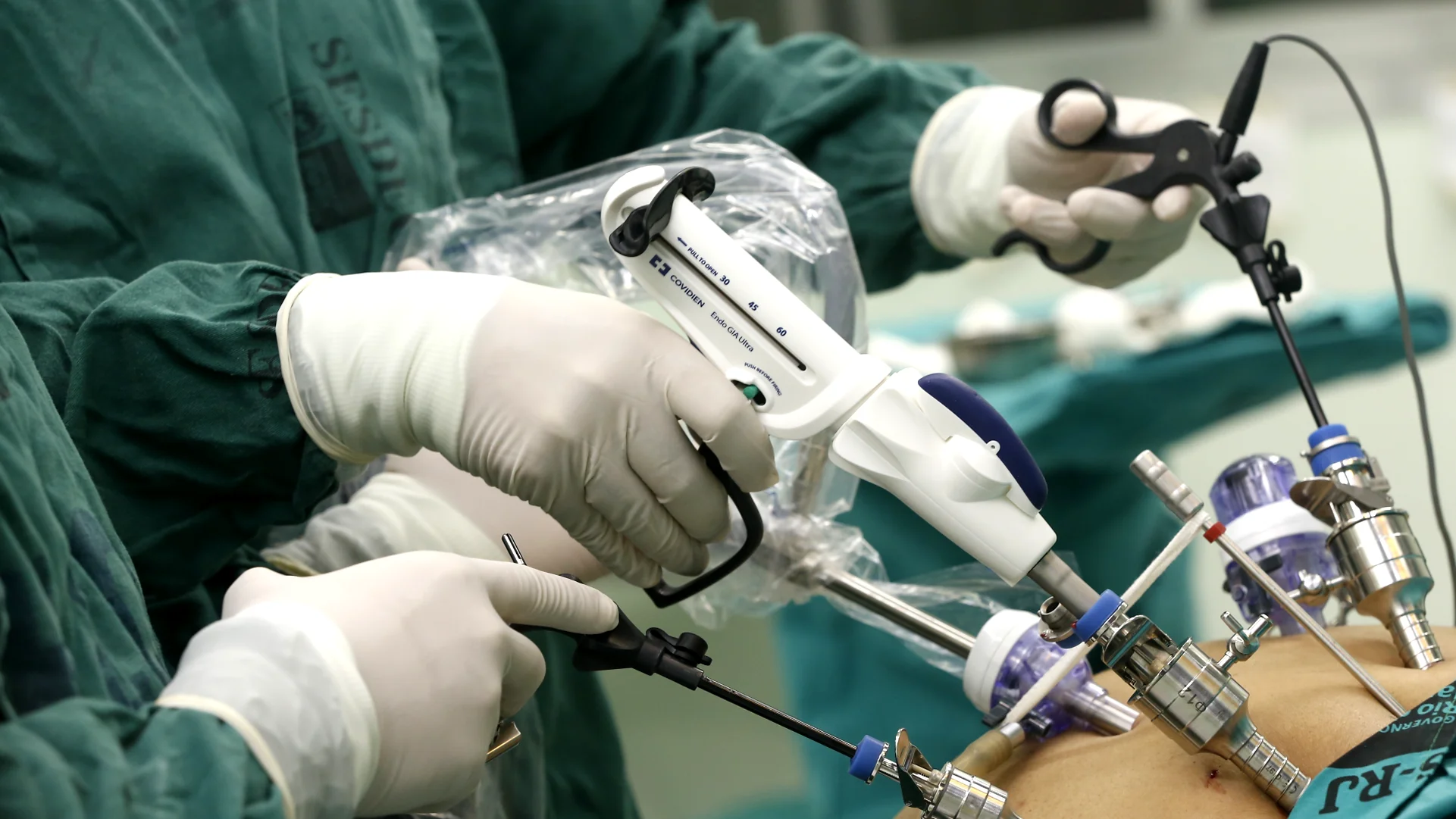
Contemporary medicine is a long way off traditional open surgeries. Doctors are now working on methods that are less painful, safe and faster in order to benefit the patients. Endoscopy and laparoscopy are both among the most common of such sophisticated procedures. The two methods involve special tools that are used to view the body and to treat it. They might look alike at first sight; however, in the real sense, they are used to serve diverse purposes, and they employ different tools.
The accuracy of distinction between the endoscopy and laparoscopy tools is crucial to students, medical practitioners and even patients who may be seeking to learn more about the contemporary surgical procedures. Now we will learn their main distinctions, instrument types, applications, and benefits in a straightforward and entertaining manner in this blog.
What is Endoscopy? A Closer Look Inside Without Surgery
Endoscopy is a medical technique of observing the interior of the body with the help of a flexible tube known as an endoscope. A camera and a light are attached to this tube, and the doctors can see the internal organs in real-time. The endoscope is typically passed via natural orifices like the mouth, nose or anus. This implies that in the majority of cases there are no cuts or incisions. Fun Fact: The term 'endoscopy' is commonly referred to as a non-surgical procedure since it does not imply any incision of the body!
What is Laparoscopy? Minimally Invasive Surgery Explained
Laparoscopy is a medical operation whereby small cuts are done in the body to pass a camera and other special equipment. A laparoscope is the primary device employed, and it allows visualising internal organs on a screen. Laparoscopy, unlike endoscopy, uses small incisions, yet it is still regarded as being a minimally invasive procedure as opposed to traditional open surgery. Fun Fact: Laparoscopy is also referred to as keyhole surgery due to the small cuts that are made!
How do Endoscopy and Laparoscopy Compare?
Both techniques involve cameras and the use of sophistication, but the purpose and the method are very different.
- Endoscopy: This is mostly employed in diagnosis and small surgeries without incisions.
- Laparoscopy: Surgeries with small incisions.
- Access to endoscopy: Via natural body openings.
- Laparoscopy access: Via miniaturised surgical incisions.
- Endoscopy tools: tubes and flexibility.
- Laparoscopy tools: Rigid and meant to do surgery.
- Quick Insight: With endoscopy, the action is more about seeing, whereas laparoscopy is more about seeing and acting.
Types of Endoscopy Instruments
Endoscopy tools are created to be mobile and able to manoeuvre within the body.
- Endoscope
The primary tool that is used to examine internal organs.
- Biopsy Forceps
used to obtain small tissue samples to be tested.
- Suction Devices
Assistance in fluid removal or obstructions.
- Light Source and Camera System.
Give clear pictures in the process.
- Injection Needles
Intended to be applied to the body to administer medication.
Fun Fact: Newer endoscopes have the capability of high-definition images!
Laparoscopy Instruments
Laparoscopy tools are made precise and controllable in surgeries.
- Laparoscope
A device that is fitted with a camera to observe internal organs.
- Trocars and Cannulas
Used to make instrument entry points.
- Graspers
Assistance in supporting and transferring tissues.
- Scissors
Scissors used to cut tissues.
- Needle Holders
Used for suturing.
- Electrosurgical Devices
Applied in the treatment of tissues and bleeding.
Fun Fact: There are laparoscopic tools that rotate and move in various directions to be controlled better!
Applications of Laparoscopy: Where Surgery Meets Precision
Endoscopy has many fields of application in medicine, including:
- Gastrointestinal (stomach, intestines) exams.
- Checks of respiratory system (lungs and airways)
- Colonoscopy procedures
- Diagnosing ulcers, tumours or infections.
Fun Fact: Endoscopy is able to identify diseases at a very, very early stage!
Laparoscopy Uses: Surgery Meets Precision
Various types of surgery include laparoscopy.
- Gallbladder removal
- Hernia repair
- Appendix removal
- Gynecological surgeries
- Kidney and liver surgeries.
Fun Fact: A lot of laparoscopic surgeries enable patients to leave the hospital the same day!
Advantages of Endoscopy
Endoscopy has a number of advantages:
- No incisions or cuts.
- Quick procedure time
- Minimal discomfort
- Faster recovery
- Applicable in early diagnosis.
Fun Fact: There are endoscopy procedures that can be concluded even in less than 30 minutes!
Advantages of Laparoscopy
Laparoscopy is very useful in surgical procedures:
- Less extensive incisions than open surgery.
- Reduced post-surgical pain.
- Faster healing
- Reduced hospital stay
- Minimal scarring
Fun Fact: Laparoscopy heals up to 50% faster than traditional surgery!
Limitations You Should Know
Although both methods are sophisticated, they have certain drawbacks.
Endoscopy Limitations
- Restricted to diagnostic and minor operations.
- Is unable to have major surgeries.
Laparoscopy Limitations
- Requires surgical expertise
- A bit more expensive than endoscopy.
- Still entails minor cuts.
- Our understandings: Choosing the appropriate technique is based on the situation of the patient.
Materials Used in These Instruments
The materials used to make both endoscopy and laparoscopy are of high quality, including:
- Stainless steel
- Fiber optics
- Medical-grade plastics
- Titanium
These materials are durable, safe, and hygienic.
Importance of Sterilization and Safety
Both types of instruments are important in preventing infections by sterilisation.
Common methods include:
- Autoclaving
- Chemical sterilization
- UV cleaning
Fun Fact: With the correct sterilisation, 99.9% of detrimental microorganisms can be killed!
Technology Behind These Instruments
The contemporary devices are driven by modern technology:
- High-definition imaging systems
- 3D visualization
- Robotic-assisted surgery
- AI-based diagnosis
- These inventions are simplifying processes and making them more precise.
Which One is Better? Endoscopy or Laparoscopy
There is no “one-size-fits-all” answer.
- Choose endoscopy for diagnosis and minor treatments
- Choose laparoscopy for surgical procedures
Key Point: The choice depends on the medical condition and the doctor's recommendation.
Choosing the Right Medical Instruments Supplier
Hospitals have to select competent suppliers of quality instruments.
Key factors:
- Certified products
- Wide range
- Good support
- Affordable pricing
- Quality tools guarantee the improvement of performance and patient safety.
The Reason Quality Instruments Are Important than you think
High-quality instruments:
- Improve accuracy
- Reduce risks
- Ensure patient safety
- Deliver better results
Fun Fact: It can only take a slight change in instrument quality to influence the whole process!
Future of Endoscopy and Laparoscopy Instruments
The future is bright due to the ongoing development:
- Robot surgery is becoming the norm.
- Sensory smart devices.
- AI-assisted procedures
- Improved imaging systems
- Such innovations will further imbue healthcare with safety and effectiveness.
Conclusion: Understanding the Right Tool for the Right Treatment
Two of the strongest methods that have revolutionised modern medicine are endoscopy and laparoscopy. Although endoscopy is primarily applied in the diagnosis and minor treatments, laparoscopy is applied in the implementation of the surgeries with accuracy.
Both of them are based on the use of sophisticated tools that guarantee improved patient outcomes, quicker recovery, and enhanced safety.
Knowing their differences, applications, and benefits can assist in making sound decisions and in understanding the importance of technology in healthcare.
Ultimately, it is not so much about the procedure but having the appropriate tools to deliver the best care.